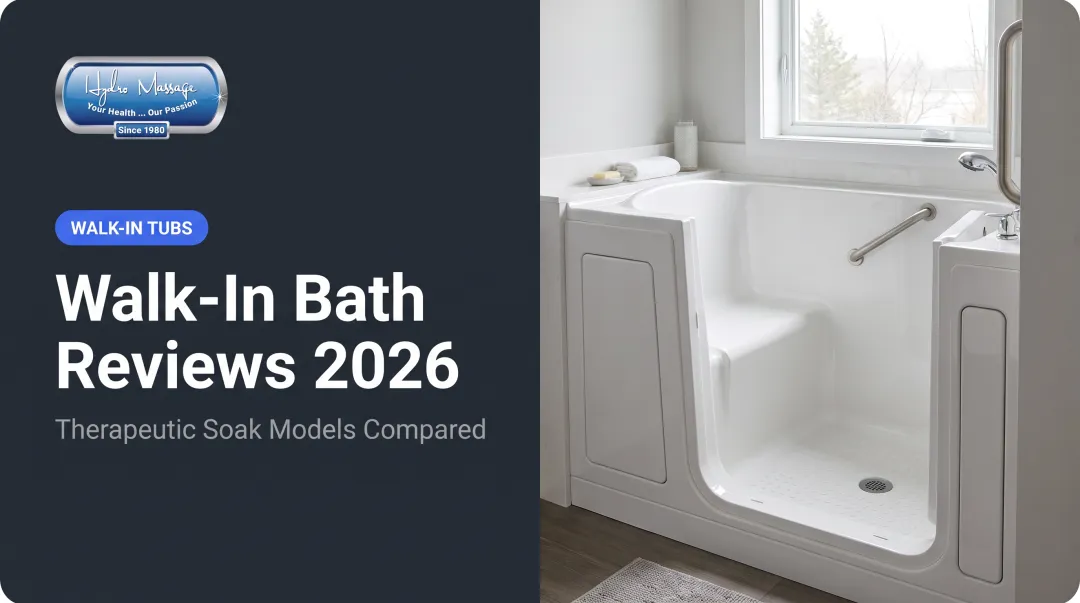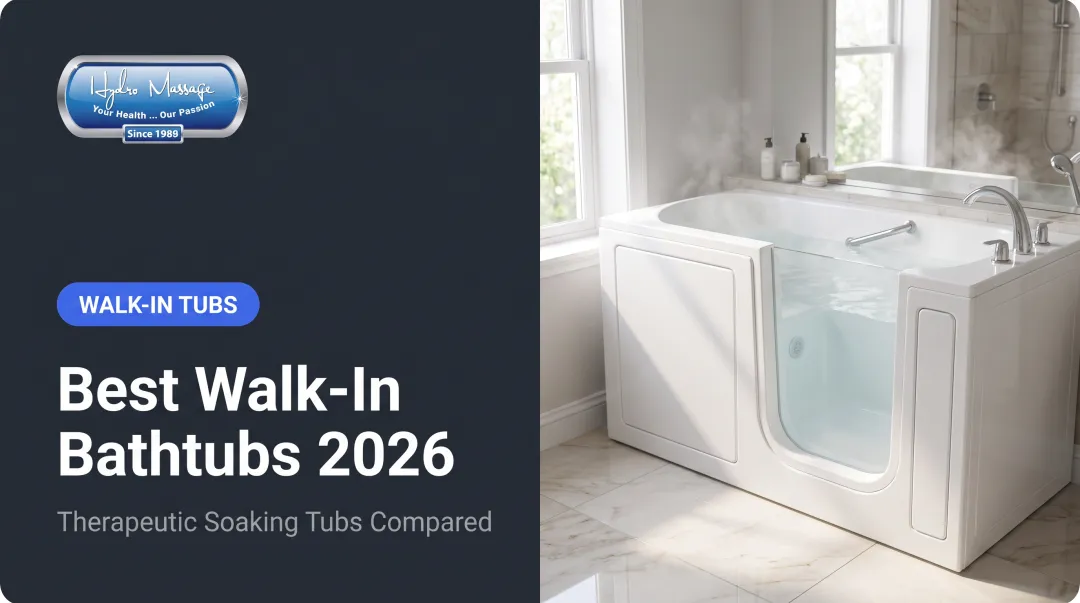

High tub walls, wet tile, and awkward transfers create a perfect storm for falls. Combine that with a growing 65+ population, and it's no surprise more families are researching walk-in tubs as a way to make aging in place safer.
This guide covers the top-rated walk-in tubs for 2026, what they actually cost, financial assistance options worth checking, and alternatives for seniors who need something different.
Key Takeaways
- Walk-in tubs use a low step-in threshold and watertight door to cut fall risk during bathing
- Installed costs typically run $3,000 to $17,000+ depending on tub type and features
- Original Medicare won't pay for a walk-in tub, but Medicaid waivers, VA grants, and financing can help
- Kohler, Safe Step, and American Standard lead on step-in height and warranty strength
- Showers, bath steps, and freestanding therapeutic tubs are solid alternatives by need and budget
Overview of Walk-In Tubs for Seniors
A walk-in tub is a bathtub with a hinged, watertight door built into the side. Users step over a threshold of just a few inches instead of climbing a standard 14-to-17-inch tub wall. That door seal is the entire point. It's what separates a walk-in tub from a regular tub with a grab bar bolted on.
Demand for this kind of accessible bathing solution is climbing for a simple reason: there are more older adults than ever. The U.S. 65+ population reached 55.8 million in 2020, a 38.6% jump from 2010 — the fastest decade of growth for this age group since the 1880s, per the U.S. Census Bureau.
Below, we rank the top walk-in tub brands for 2026 based on safety, comfort, and value.
Who Benefits Most From a Walk-In Tub
Not every senior needs one, but for certain groups, the investment pays off fast:
- Arthritis or Parkinson's patients who struggle with balance and grip strength
- Patients recovering from hip or knee surgery who find high leg lifts painful or risky
- Vision-impaired individuals who benefit from a consistent, predictable entry point
- Wheelchair users who need a seated transfer rather than a standing step-over
Walk-in tubs also support a goal most seniors already have: staying put. An AARP survey found roughly three-quarters of older adults want to remain in their current homes long-term, and most who anticipate home modifications expect bathroom work specifically. A safer tub often makes that possible without a full move.
Top 5 Best Walk-In Tubs for Seniors in 2026
We compared brands on step-in height, safety certifications, comfort features, warranty strength, and overall price value. These five leading options stood out for senior-focused bathing across those criteria.
Kohler
Kohler has manufactured plumbing fixtures for over a century, and its walk-in tub line reflects that engineering pedigree. The company's low-threshold design is built around fast-fill and fast-drain technology, so users aren't sitting in cold water waiting for a tub to empty.
Standout features: hydrotherapy jets, a heated backrest, and an adjustable handheld shower for seated bathing.
| Spec | Details |
|---|---|
| Step-in height | Average of 3 inches (varies by layout) |
| Price range | No published brand price; custom project quote required |
| Key features | Heated neck/back surfaces, adjustable handheld shower, multiple customization options |
Kohler backs its tubs with a lifetime limited warranty for the original owner when installed by a Kohler Authorized Dealer, covering the door seal, hydrotherapy system, faucet, and handshower.
Safe Step
Safe Step built its entire business model around safety-first, all-inclusive installation. Nearly every surface inside the tub (floor, seat, even the entry step) carries an anti-slip texture, and an anti-scald valve keeps water temperature steady.
Standout features: dual hydrotherapy massage system, an electronic keypad, and recognition from the Arthritis Foundation as an Ease of Use partner.
| Spec | Details |
|---|---|
| Step-in height | Less than 4 inches, per Arthritis Foundation documentation |
| Price range | Custom quotes based on size, features, and existing plumbing/electrical |
| Key features | Dual hydrotherapy jets, anti-scald technology, lifetime manufacturing defect coverage |
Safe Step's installation is bundled into its pricing model, which simplifies the process for families who don't want to hire a separate contractor.
American Standard
American Standard offers the widest style and price range of any major brand, from basic soakers to whirlpool models with chromotherapy lighting. Its nationwide installer network is a major advantage: a certified installer is likely close to home no matter where you live.
Standout features: ADA-compliant 17-inch seat height, wheelchair-accessible model options, and quick-drain technology.
| Spec | Details |
|---|---|
| Step-in height | Marketed as "low step-in"; no numeric threshold published |
| Price range | Custom quote required |
| Key features | Whirlpool and air-jet systems, chromotherapy lighting, ADA-compliant seat |
Warranty terms vary by material. Acrylic models get 15 years on the tub shell and 10 years on components; gelcoat models get 10 and 5 years respectively. Both include a lifetime door seal warranty for the original owner.
Ella's Bubbles
This Chicago-based manufacturer has focused exclusively on acrylic, wheelchair-accessible walk-in tubs since 2005. Ella's Bubbles was the first to bring a two-seat walk-in tub to market, which matters for couples or caregivers who bathe alongside a senior.
Standout features: dual-drain technology, foot-massage jets, and dedicated veteran discounts.
| Spec | Details |
|---|---|
| Step-in height | Not published on the official product page |
| Price range | LayDown72 model listed at $3,774–$6,552 (equipment only, as of July 2025) |
| Key features | Dual-drain system, foot-massage jets, bariatric and extra-large sizing available |
The company backs tubs with a lifetime limited warranty for the original purchaser at the original address, covering the shell, frame, door seal, motors, and pumps (installation labor excluded).
Universal Tubs
Sold through a major home improvement retailer, Universal Tubs targets families who want accessible pricing without sacrificing customization. Buyers can choose color, drain location, and door swing direction.
Standout features: whirlpool and air jet options, heated seats, and optional chromotherapy and aromatherapy add-ons.
| Spec | Details |
|---|---|
| Step-in height | Low-threshold entry advertised; no numeric height published |
| Price range | Personalized, no-obligation quote |
| Key features | Whirlpool/air jets, heated seats, extensive customization |
Warranty coverage varies by model, so confirm the specific terms document before ordering.

How These Rankings Were Determined
There's no single universal industry standard for step-in height. The National Council on Aging's 2026 methodology prefers 3 inches or less. Most tubs on the market fall between 3 and 7 inches. A 7-inch step can be too high for someone with severe arthritis or muscle weakness, according to NCOA's cost analysis.
The most common buyer mistake is choosing a tub purely on price without confirming the installer's credentials.
Before signing anything, ask for:
- Proof of manufacturer-authorized installer certification
- Photos or references from prior walk-in tub installations (not general plumbing work)
- Written confirmation that the warranty stays valid only with professional installation
Walk-In Tub Costs, Lifespan & Financial Assistance
Pricing varies widely by tier. Here's the 2026 benchmark breakdown:
| Tub tier | Equipment cost | Total installed |
|---|---|---|
| Basic/soaker | $2,000–$5,000 | $3,000–$10,000 |
| Mid-range jetted/whirlpool | $5,000–$8,000 | $6,000–$13,000 |
| Luxury multi-feature | $8,000–$12,000+ | $9,000–$17,000+ |
Source: NCOA, 2026 cost benchmarks
What Drives Installation Costs
Installation alone typically runs $1,000 to $5,000+, depending on:
- Plumbing relocation — moving supply lines or drains
- Electrical upgrades — GFCI outlets or panel work for jetted models
- Structural changes — floor reinforcement, doorway widening
- Regional labor rates — costs vary widely by market
Lifespan and Warranty
There isn't a reliable, independently verified lifespan figure for walk-in tubs across the industry. What you can rely on is the warranty.
A brand offering a lifetime limited warranty on the shell and door seal — like Kohler, Safe Step, or Ella's Bubbles — signals confidence in long-term durability. Shorter warranties often mean shorter expected service life.
Does Medicare or Medicaid Cover It?
No, Original Medicare doesn't cover walk-in tubs. Medicare.gov defines durable medical equipment as items expected to last at least three years and used mainly by someone who is sick or injured. Walk-in tubs aren't on that list.
Some Medicare Advantage plans offer supplemental benefits that might help, but coverage is plan-specific.
Other funding sources worth exploring:
- Medicaid HCBS waivers — may fund bathroom modifications tied to health and safety needs, though a walk-in tub isn't guaranteed
- VA grants — Specially Adapted Housing (SAH) up to $126,526, Special Home Adaptation (SHA) up to $25,350, or HISA grants up to $6,800 for qualifying veterans
- USDA Section 504 — loans up to $40,000 or grants up to $10,000 for eligible rural homeowners 62+
- Habitat for Humanity's Aging in Place program — local affiliates assess needs and may assist with repairs
Get written preauthorization before purchasing if you're counting on any of these programs.
Alternatives & Complementary Bathing Solutions for Seniors
A walk-in tub isn't the right fit for everyone. Here are the main alternatives worth considering.
Walk-In Showers & Shower-Tub Combinations
Curbless, low-threshold walk-in showers with built-in benches and grab bars work well for seniors who don't need a deep soak. ADA design standards call for a threshold no higher than half an inch for roll-in showers, though existing-home exceptions can allow up to 2 inches.
Shower-tub combination units split the difference, offering a standing shower option alongside a seated soak for households with mixed needs.
Bathtub Steps, Transfer Benches & Grab Bars
For seniors not ready to replace their tub, lower-cost upgrades can still meaningfully reduce fall risk:
- Bathtub steps — look for a wide, non-slip base and a sturdy handrail rated for the user's weight
- Transfer benches — check the model's specific weight rating and tub-wall clearance before buying
- Grab bars — professionally installed bars must be able to withstand significant force; DIY installation into drywall alone isn't sufficient
Freestanding Jetted Soaking Tubs for Wellness-Focused Seniors
Some seniors care less about step-in accessibility and more about hydrotherapy, relaxation, and pain relief. For that group, a premium freestanding jetted soaking tub can be the better fit, especially during a full bathroom remodel where a centerpiece tub matters as much as function.
Hydro Massage Products has manufactured freestanding jetted bathtubs in Aurora, Colorado since 1980. Lineup pricing runs from $1,595 to $6,995 across water-jet, air-jet, and combination massage tiers.
What buyers typically get:
- Therapeutic setups aimed at easing aches, cutting stress, and supporting better sleep
- Limited lifetime warranty on the tub shell and pump on Platinum-tier models
- A Custom Build & Price tool to set size, jet type, and finish before ordering

This path fits remodel projects where daily hydrotherapy matters more than a door-entry tub.
Conclusion
The right walk-in tub depends on mobility needs, budget, and whether hydrotherapy or accessibility matters more. Kohler and Safe Step lead on step-in height, American Standard wins on installer availability, and Ella's Bubbles fits couples or larger-bodied users.
Before committing, request in-home consultations from at least two providers and compare warranty terms tied to professional installation, not just the sticker price.
If you're planning a bathroom remodel and want a premium, American-made therapeutic tub rather than a door-entry model, explore Hydro Massage Products' Custom Build & Price tool or call (888) 968-4933 to talk through configurations for your space.
Hydrotherapy Benefits Seniors Actually Notice
Warm-water hydrotherapy is one of the reasons a walk-in bath gets used daily rather than sitting unused after the first month. The benefits owners most often describe fall into six areas:
- Arthritis pain. Warm water is widely used to help reduce pain and inflammation while supporting circulation.
- Back pain. Deep warm water and well-placed jets help ease stress and tension along with burning or shooting pain.
- Sleep. Many owners bathe in the evening; the body is better equipped to relax as it cools down afterward.
- Fibromyalgia. Owners report relief from pain along with improvements in mood and energy levels.
- Stiffness and recovery. Soaking helps soothe sore muscles and stiff joints, which matters most first thing in the morning.
- Circulation and cardiovascular conditions. Some owners with diabetes or heart conditions use hydrotherapy under medical guidance.
Any hydrotherapy plan for treating a health condition should be reviewed with a healthcare professional. This information is general and educational, and is not medical advice, diagnosis or treatment. Results vary from person to person.
The features that make a soak worth taking
A bath only delivers those benefits if it is comfortable enough to stay in for half an hour.
Water depth. If the water only reaches your belly you get cold quickly and cut the soak short. Water should cover the upper chest and shoulders.
Armrests. Many baths have none, and a high rim forces the shoulders up and creates neck tension. Hydro Massage armrests are shaped so elbows rest down and hands rest up, which is easier on arthritic shoulders.
Back angle. A back sloped between 115 and 130 degrees lets you lay back like a recliner instead of sitting nearly upright.
A heater that keeps up. A stainless steel 115V heater with a smart thermostat cuts in whenever water falls below 104°F, so a long soak stays warm without topping up.
Jets where the pain is. Many baths cluster jets around mid back only. Hydro Massage therapeutic back systems cover neck, shoulders, mid back, lower back and feet, each jet delivering a dual pulsating stream over roughly a 2-inch area.
Compare senior-friendly bathing options and walk-in models with therapeutic jets on these points rather than on jet count alone.
Frequently Asked Questions
What is the average cost of a walk-in tub?
Installed costs typically range from $3,000 for a basic soaker to $17,000+ for a luxury multi-feature model, according to NCOA's 2026 benchmarks. Plumbing, electrical work, and structural changes drive most of the variation.
Will Medicare pay for a walk-in tub?
Original Medicare doesn't cover walk-in tubs since they aren't classified as durable medical equipment. Some Medicare Advantage plans or state Medicaid waivers may offer partial help, depending on eligibility.
What is an alternative to a walk-in tub for the elderly?
Walk-in showers, bathtub steps, transfer benches, and freestanding jetted soaking tubs all work as alternatives, depending on whether the priority is accessibility, cost, or wellness.
What is a good bathtub step for elderly people?
Look for a non-slip textured surface, a sturdy handrail, and a wide base rated to support the user's full weight safely during transfer.
What is the best walk-in tub on the market?
Kohler and Safe Step lead on low step-in height and warranty strength; American Standard offers the broadest installer network nationwide—match the brand to the feature you need most.
What is the lifespan of a walk-in tub?
There's no universally verified lifespan figure, but warranty length is a good proxy: brands offering lifetime coverage on the shell and door seal typically build for long-term durability.
Do walk-in tub jets actually help arthritis pain?
Warm-water hydrotherapy is widely used to help reduce arthritis pain and inflammation and support circulation, and many owners report meaningful relief, particularly with morning stiffness. Benefits vary by person, and any hydrotherapy plan for a health condition should be reviewed with a healthcare professional. This is general educational information, not medical advice.
What features make a walk-in tub comfortable for a senior?
Water deep enough to cover the upper chest and shoulders, ergonomic armrests that let the elbows rest down rather than gripping a high rim, a back reclined between 115 and 130 degrees, room to stretch the legs, a heater that maintains temperature above 104°F, and jets placed across neck, shoulders, mid and lower back rather than mid back alone.