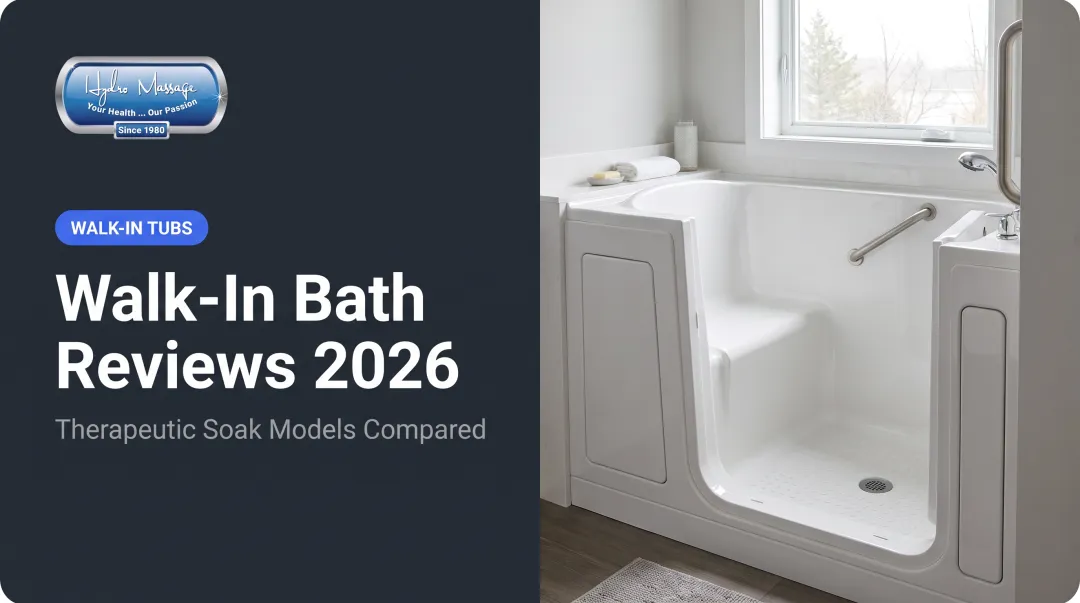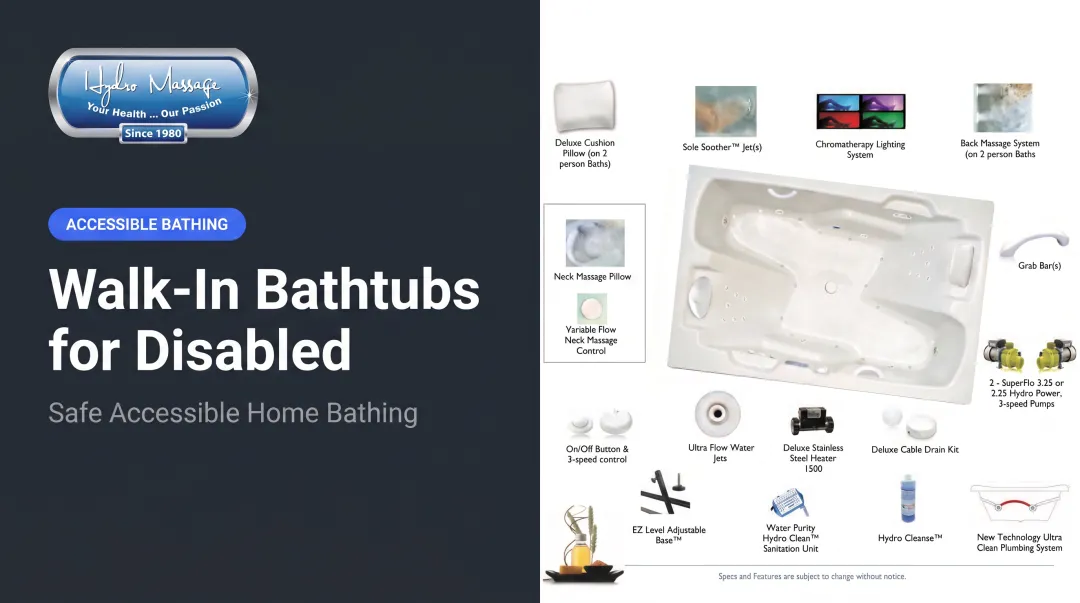

Cost depends on tub type, therapeutic features, shell materials, and how complicated your bathroom's plumbing situation is. A basic soaker and a bariatric hydrotherapy model with chromotherapy lighting can differ by $10,000 or more.
This guide breaks down 2026 pricing by tier, the factors that push costs up or down, the full expense picture beyond the sticker price, and how to build a realistic budget before you buy.
Key Takeaways
- Total installed cost: $3,000–$17,000+, including the tub and labor
- Jets, heat, chromotherapy, and install complexity drive price more than tub size
- Installation adds $1,000–$8,000, based on plumbing and electrical work
- Medicare won't cover most walk-in tubs; VA grants, Medicaid waivers, and financing can help
How Much Does a Walk-In Tub Cost? (2026 Pricing Overview)
There's no flat rate for walk-in tubs. Pricing swings based on tub type, jet systems, brand reputation, and what your bathroom requires for installation.
According to NCOA's 2026 walk-in tub cost breakdown, total installed costs generally fall between $3,000 and $17,000+. ConsumerAffairs' separate benchmark reaches as high as $20,000 for fully-loaded models.
Before you start shopping, watch for three common budgeting mistakes:
- Underestimating installation: many buyers only budget for the tub itself
- Mismatching therapeutic needs: buying a basic soaker when you need jet therapy—or paying for features you won't use
- Ignoring water heater capacity: most walk-in tubs need a 50+ gallon tank, and older homes often don't have one
Entry-Level / Basic Walk-In Tubs
Basic soaking-only tubs, with no jet systems, run $3,000-$10,000 total installed ($2,000-$5,000 for the unit, $1,000-$5,000 for labor), per NCOA. This tier typically includes:
- A deep soaking basin with a low threshold (3-7 inches)
- Built-in chair-height seating
- Textured, nonslip flooring and seat surfaces
- Grab bars and a handheld showerhead
This tier suits buyers who want fall-risk reduction and independent bathing without therapeutic add-ons. If pain relief or circulation issues are part of the equation, jump to the hydrotherapy tier below.
Mid-Range / Hydrotherapy Walk-In Tubs
Adding jets moves total installed cost to roughly $6,000-$13,000, according to NCOA, with unit-only pricing around $6,000-$12,000+ per ConsumerAffairs. This tier includes air jets (gentler, warm-air massage), water jets (stronger pressure), or combination systems. Many models also add quick-drain options that shorten the wait between soaking and standing.
Hydro Massage Products' walk-in line illustrates the spread well. Its Tranquil 5226 and 5230 models come in three jet families:
| Jet Type | Tier | Jets | Price |
|---|---|---|---|
| Hydro | Silver | 9 | $7,080 |
| Air | Silver | 12 | $7,307 |
| Hydro | Gold | 12 | $7,987 |
| Air | Gold | 18 | $8,272 |
| Combo | Silver | 21 | $9,129 |
| Air | Platinum | 34 | $9,846 |
| Combo | Gold | 30 | $10,271 |
This tier fits buyers managing chronic pain, poor circulation, or post-surgery recovery who want measurable therapeutic value, not just a safer bathing setup.
Premium / Luxury Walk-In Tubs
Fully-loaded tubs with combination jets, bariatric reinforcement, two-seater configurations, or luxury finishes land at $9,000-$17,000+ installed, per NCOA. Bariatric-specific units alone can run $15,000-$20,000+ for the tub, with installation adding another $2,500-$15,000+ depending on structural reinforcement needs, according to ConsumerAffairs.
Expect features like chromotherapy lighting, aromatherapy diffusion, heated backrests, and oversized basins with 500+ pound weight capacities at this level.
Premium configurations vary widely by manufacturer, so generic ranges only go so far. Hydro Massage Products, building therapeutic jetted bathtubs in Aurora, Colorado since 1980, offers a Custom Build & Price configurator so you can price your exact size, jet tier, and finish instead of guessing from an industry average.

Key Factors That Affect the Cost of a Walk-In Tub
Two things determine your final price: what you're buying, and what it takes to install it in your specific bathroom.
Tub Type & Door Configuration
Inward- or outward-swinging doors come standard on most soaker and jetted models. Wheelchair-accessible configurations (wider doors, near-level thresholds) typically start around $5,000-$12,000+ for the unit alone.
Door modifications can raise installation costs further if your bathroom's framing needs adjustment.
Therapeutic Features Selected
Each system you add stacks onto the base price:
- Water jets: stronger massage pressure, moderate cost increase
- Air jets: gentler bubble therapy, similar cost range
- Combination systems: both water and air, higher price point
- Chromotherapy: mood-based colored lighting, smaller add-on cost
- Aromatherapy: scent diffusion during soaking, smaller add-on cost
Materials & Build Quality
NCOA benchmarks coated fiberglass shells at $2,000-$5,000 and acrylic construction at $5,000-$12,000. Acrylic, fiberglass-reinforced shells generally hold up better over decades of use than thinner fiberglass alone. Check the warranty documentation before you buy.
Size & Weight Capacity
Bariatric and two-seater models need more raw material, more floor space, and more installation labor. That combination is why bariatric units can run $15,000-$20,000+ before installation, well above standard single-occupant tubs.
Installation Complexity
This is where budgets often go sideways. ConsumerAffairs' 2026 installation cost data breaks labor down to $2,500-$8,000, with specific line items including:
- Old tub demolition/removal: $250-$700
- Plumbing upgrades: $500-$2,000
- Electrical upgrades: $200-$1,200
- Water heater upgrade: up to $3,000
Most walk-in tubs need at least a 50-gallon water heater tank. A filled tub takes far more hot water than a quick shower, and running out mid-soak defeats the purpose entirely. Jetted or heated models may also need a dedicated circuit and GFCI outlet.
Brand & Warranty Coverage
Lifetime warranties on the shell and pump cost more upfront but reduce long-term repair exposure.
Hydro Massage Products, for example, backs its acrylic, fiberglass-reinforced shells and factory-installed pumps with limited lifetime coverage for the original purchaser on Platinum-tier models (continental U.S. only). Standard equipment and plumbing components carry 2-year coverage.
Walk-In Tub Cost Breakdown: What You're Really Paying For
The advertised tub price is one line item in a longer bill. Here's the full picture:
- Tub Purchase (one-time): Shell, frame, door, and built-in features. Most buyers fixate on this number—it least reflects total cost.
- Installation & Labor (one-time): Demolition, plumbing, electrical, and setup. Budget $2,500–$8,000 (ConsumerAffairs 2026); more if the layout needs structural work.
- Accessories & Add-Ons (one-time): Grab bars (Hydro Massage Products: $144 each, six finishes), custom seating, handheld shower wands—small alone, quick to add up.
- Water Heater or Plumbing Upgrades (one-time, situational): If your existing tank is under 50 gallons, plan for up to $3,000 more.
- Ongoing Maintenance (recurring): Seal replacement, jet servicing, and cleaning products over the tub's life—higher if maintenance slips.

Low-Cost vs. High-Cost Walk-In Tubs — What's the Difference?
Price gaps between tubs usually come down to three things, not just brand markup.
Materials & Durability
Lower-cost tubs tend to use thinner shells with shorter or limited warranties, which raises the odds of premature failure. Higher-cost models use reinforced frames and gel coats designed for 20+ year lifespans, backed by stronger warranty terms.
Therapeutic Features & Comfort
Budget tubs offer little to no jet therapy or customization. Premium tubs add multiple jet systems, heated seating, and options like chromotherapy. That feature gap is what separates a basic safety fixture from a real wellness upgrade.
Long-Term Value
Cheaper tubs carry higher risk of repairs or early replacement, which can erase the upfront savings within a few years. Higher-cost tubs usually mean fewer service calls and a lower chance of replacing the unit early. ConsumerAffairs puts average walk-in tub lifespan at 15-20 years with proper maintenance, across price tiers. Weaker materials still tend to fail sooner within that range.
How to Estimate the Right Budget for a Walk-In Tub
Budgeting for a walk-in tub means matching the unit to your real needs, not chasing the lowest sticker price.
Before setting a number, weigh:
- Therapeutic need: basic accessibility versus pain relief or circulation support
- Household use: will multiple people use this bathroom, and does that affect size or seating needs?
- Existing plumbing and electrical capacity: older homes often need upgrades before a jetted tub is possible
- Weight and size requirements: bariatric or two-seater needs change the price bracket entirely
Get more than one in-home assessment before committing. A manufacturer's online configurator, such as Hydro Massage Products' Custom Build & Price tool, also lets you compare costs by size, jet tier, and finish before an installer visits.
Financial assistance worth researching first:
- VA home modification grants: HISA benefits and SAH/SHA grants may apply for qualifying service-connected disabilities
- State Medicaid waivers: coverage varies by state and typically requires medical necessity documentation from a physician or occupational therapist
- Manufacturer or installer financing plans: ask directly, since terms aren't standardized industry-wide
Common budgeting mistakes to avoid:
- Focusing only on the advertised tub price
- Ignoring installation and maintenance costs
- Over-specifying features you won't actually use
- Choosing the cheapest option without verifying warranty terms and installer reliability

Where the Money Actually Goes Inside the Tub
Quoted prices tell you what a bath costs. They rarely tell you what you are buying. Inside a jetted or walk-in bath, cost concentrates in two components, and both are places where a low price is usually explained.
The shell is the most expensive part. Every acrylic bath starts as a flat cast sheet, heated to roughly 390°F, drawn over a mold by suction, then fiberglass-reinforced from behind. Cutting the acrylic sheet thickness by around 20% and using 200-300% less fiberglass produces a considerable per-unit saving. It also produces the flimsy sidewalls and flexing, squeaking floors behind a great many complaints, and a higher risk of cracking that some manufacturers hedge with short warranties. If one quote is dramatically lower than another, shell material is the first place to look.
The pump is second. Because it is expensive, small low-performance pumps with modest water flow are common at the lower end and are rarely described that way in a quote. For comparison, Hydro Massage fits an American-made 3.25 HP 3-speed Super Flo pump delivering up to 80% more water flow through its plumbing, with a stainless steel 115V heater and smart thermostat that holds water above 104°F.
Then there is the cost that arrives later. A pump that fails in a bath with no service access is not just a parts bill. A plumber disconnects the drain, the bath is turned upside down, a technician fits the replacement, then the plumber returns to right the bath and reseal, commonly $600-$900 in labor before the pump itself. If the warranty covers parts but excludes labor, all of that is yours. Hydro Massage includes an in-tub access panel as standard on its therapeutic water massage baths and covers pumps and the structural integrity of the bath under a limited lifetime warranty, with service-related issues recorded on under 1% of baths over more than four decades.
A worked example of the real total. One owner chose an online jetted tub about $2,000 cheaper than local options while building a home in 2015. The jets sprayed outside the bath, black mildew began discharging from them within months, the pump failed at roughly two years with no access panel to reach it, the faucets loosened and leaked, and an eventual major leak destroyed the ceiling below. Their estimate of what the six years cost: over $5,000, plus the replacement bath.
How to budget properly. Ask for acrylic thickness and fiberglass layers, pump horsepower and speeds, whether the plumbing is arched above the jets, whether there is an access panel, and whether labor is covered. Then compare quotes. A price is only comparable once you know what is behind it. Our guide to the best jetted bathtubs walks through those checks in detail.
Frequently Asked Questions
What is the average cost to install a walk-in bathtub?
Installation typically runs $2,500-$8,000 on top of the tub price, according to ConsumerAffairs' 2026 data. Plumbing rerouting, electrical work, and water heater upgrades are the biggest variables affecting where you land in that range.
Which is more expensive, a walk-in tub or a walk-in shower?
Walk-in tubs typically cost $3,000-$17,000+ installed, compared to $4,000-$16,000 for a standalone walk-in shower. Tubs generally cost more due to added therapeutic jet systems and more complex plumbing requirements.
Does Medicare pay for walk-in bathtubs?
Original Medicare generally does not classify walk-in tubs as durable medical equipment, treating them instead as home modifications, according to NCOA's Medicare coverage guide. Some Medicare Advantage plans and state Medicaid waivers may offer partial coverage if medically necessary.
Can seniors get a walk-in tub for free?
Fully free tubs are rare, but nonprofit programs like Rebuilding Together's Safe at Home initiative, HUD's home modification grants, and VA benefits can reduce out-of-pocket costs for qualifying seniors. Eligibility and coverage vary by program and location.
What is the lifespan of a walk-in tub?
Most well-built walk-in tubs last 15-20 years with proper maintenance, according to ConsumerAffairs. Material quality, shell construction, and how consistently you follow cleaning guidelines all affect how close a specific tub gets to that upper range.
How much should I budget for a walk-in tub in 2026?
Plan on $6,000-$17,000 total for the tub, installation, and any plumbing or electrical upgrades—not the $2,000-$5,000 entry-level unit price alone. Budget the full project, not just the advertised tub cost.
Why are some walk-in and jetted tubs so much cheaper?
Usually because of the two most expensive components. A thinner acrylic sheet with 200-300% less fiberglass reinforcement, and a smaller low-flow pump, together account for most of a large price gap. Both are invisible in a showroom and both show up later as flexing floors, cracking, weak massage or an unserviceable pump.
What hidden costs come with a cheap jetted tub?
The main one is service labor. Replacing a failed pump in a bath with no access panel typically runs $600-$900 in labor before the part, because the drain has to be disconnected and the bath turned over. Add repeated cleaning of plumbing that retains water, and any repair excluded by a parts-only warranty, and a lower purchase price can reverse within a few years.