
Bathroom falls send hundreds of thousands of Americans to the emergency room every year. In fact, 37.3% of bathroom injuries happen while bathing or getting out of the tub, according to CDC data on nonfatal bathroom injuries. That risk, combined with the loss of independence that comes from needing help just to bathe, is why so many families start researching walk-in tubs.
This guide breaks down the tub types available, what ADA compliance actually means, must-have safety features, cheaper alternatives, and how to pay for it all.
Key Takeaways
- Walk-in tubs replace high walls with a low, watertight door, cutting fall risk during entry and exit
- ADA-style features (grab bars, seats, low thresholds) matter more than the "walk-in" label alone
- Costs vary widely. Medicare rarely covers tubs, though HSA/FSA, VA grants, and financing can offset the price
- Hydro Massage Products builds American-made walk-in and slide-in tubs with hydrotherapy jets for comfort and recovery
What Makes a Bathtub Truly Accessible for Disabled Users
Standard tubs force users to lift a leg over a wall that can reach 20 inches. For someone with weak knees, balance issues, or limited mobility, that isn't possible without help—or a fall.
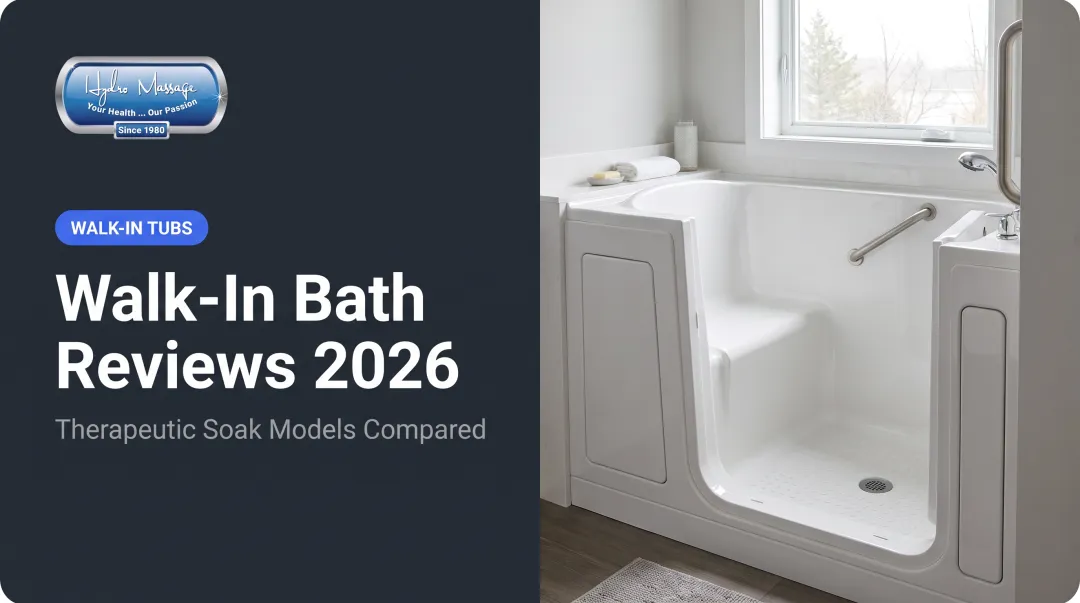
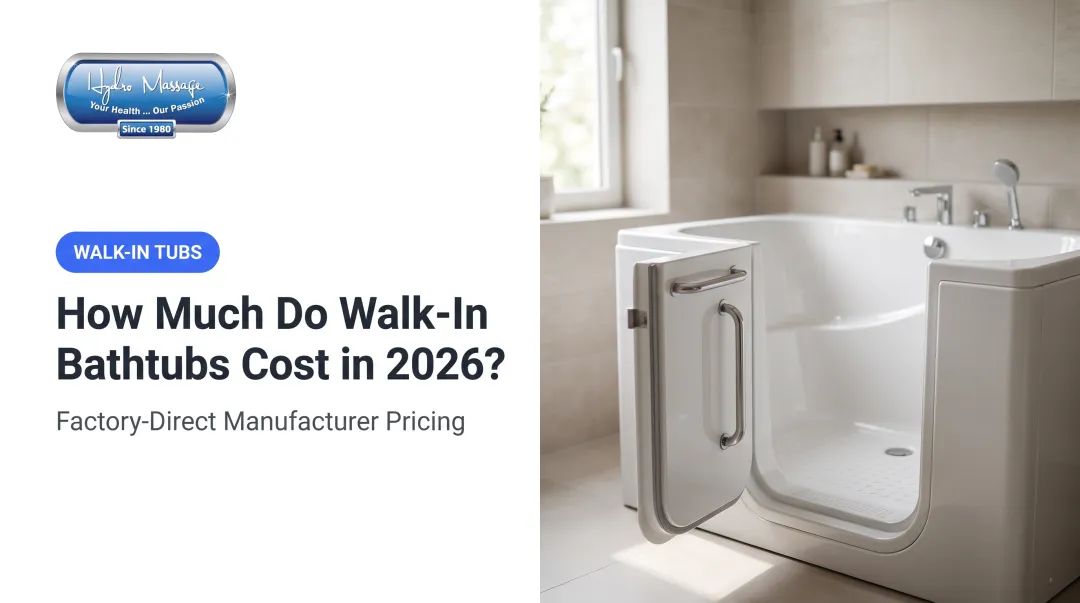
A walk-in tub solves this with a low, watertight door built into the side. Instead of climbing over a wall, the user steps through at floor level and the door seals shut before filling. An accessible bathtub goes further, meeting specific design standards for grab bars, seating, and controls.
ADA Guidelines: What They Actually Require
The Access Board's bathing room guidelines spell out specific requirements:
- Grab bars must withstand 250 pounds of force and sit 33-36 inches above the floor
- Built-in seats need a minimum 15-inch depth, positioned 17-19 inches high
- Controls must operate with one hand, without tight grasping, using no more than 5 pounds of force
- Handheld showerheads need a hose at least 59 inches long
Are ADA-Compliant and "Walk-In" the Same Thing?
No. This trips up a lot of buyers. "Walk-in tub" is a general product category. "ADA-compliant" means the tub meets a specific design standard for grab bar strength, seat dimensions, and control placement.
Plenty of walk-in tubs on the market are not ADA-compliant. If accessibility compliance matters for your situation, ask the manufacturer directly rather than assuming the walk-in label covers it.

Comparing Types of Bathtubs for Different Disabilities
Not every mobility limitation calls for the same tub. Matching the design to the user's actual transfer ability makes the biggest difference.
| Tub Type | Best Suited For | Key Feature |
|---|---|---|
| Standard walk-in tub | Users who can step over a low threshold unassisted | Inward-swinging door, built-in seat |
| Wheelchair-accessible slide-in tub | Full-time wheelchair users needing lateral transfer | Outward-swinging door, wheelchair-height seat |
| Compact tub | Small bathrooms with limited footprint | Reduced dimensions without sacrificing entry safety |
| Extra-wide/deep tub | Bariatric bathers or those wanting a deeper soak | Wider entry, higher weight capacity |
| Freestanding therapeutic tub | Homeowners wanting hydrotherapy alongside mobility support | Jetted massage combined with accessible design |
Hydro Massage Products builds models that map to these categories:
- Tranquil 5230 (52" x 30" x 40") — alcove walk-in in left- or right-hand configuration
- Tranquil 5326 (53" x 26" x 36") — narrower alcove walk-in, also left- or right-hand
For wheelchair users, the R5030 Transfer Bath includes a 35-inch-wide door for slide-in transfer. Configurations run from a 0-jet soaker up to 30-jet systems, so you can add therapeutic massage without giving up accessibility.

Must-Have Safety and Therapeutic Features
A tub can be labeled "walk-in" and still miss the features that actually prevent falls. Here's what to check for:
Safety essentials:
- Ultra-low threshold entry: NCOA reports most walk-in tubs sit at 3–7 inches; even 7 inches can be too high for severe arthritis
- Anti-slip flooring inside the tub basin
- Built-in grab bars rated to withstand real force, not decorative rails
- Contoured seating at proper height
- Quick-drain technology so users aren't waiting in an emptying tub
Ease-of-use features:
- Handheld shower wands with long hoses
- Lever-style faucets operable with limited hand strength
- Anti-scald technology to prevent burns for users with reduced sensation
Where Hydrotherapy Fits In
Beyond entry and exit safety, jetted massage systems add real therapeutic value. Warm-water immersion increases blood flow, and a Cochrane review found some evidence that water immersion reduces muscle soreness after exertion.
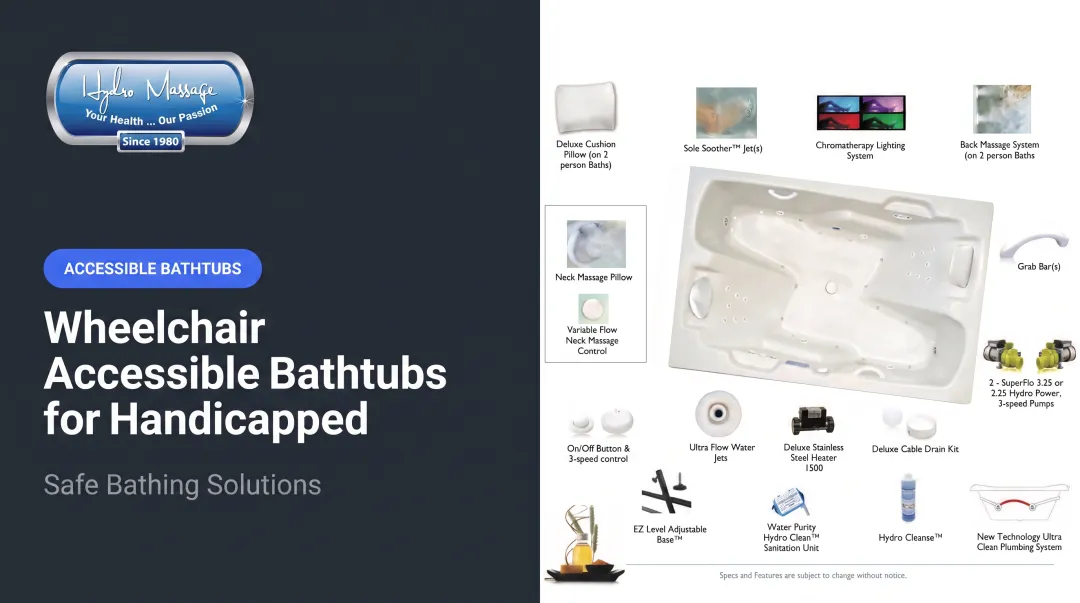
Hydro Massage Products builds this into its walk-in and slide-in models with hydrotherapy systems that use temperature, buoyancy, and jets to relax muscles and ease stiffness. Configurations range from 9-jet water systems to 34-jet Air Platinum setups, so intensity can match what the bather wants.

Accessibility hardware is modular on the same models. Grab bars come in six finishes and are priced individually (around $144 each), so you can add them without redesigning the whole bathroom.
Assistive Devices and Alternatives to a Full Tub Replacement
Not everyone is ready for a full tub swap. Several lower-cost aids can improve safety in an existing bathtub:
- Transfer benches — span the tub wall so users can sit and slide across instead of stepping over
- Bath lifts — mechanically raise and lower a seated user into the water
- Grab bars — mounted directly to the tub or wall for entry/exit support
- Non-slip mats — reduce slipping risk on wet surfaces
- Shower chairs — for those who've switched to showering instead of bathing
Tub-to-shower conversions are another route entirely — replacing the bathtub with a zero-threshold shower for those who no longer want to bathe at all.
These aids reduce risk, but they don't eliminate the core problem of a high tub wall. A walk-in tub replacement addresses entry and exit at the source rather than working around it.
Costs, Medicare Coverage, and Funding Options
What You'll Actually Pay
Pricing covers the unit itself, installation, and the full project when both are bundled:
- Tub-only cost: roughly $2,000 to $20,000, per KOHLER's pricing guide
- Installation: typically $2,500 to $8,000+, depending on plumbing and bathroom modifications
- Full project total: $10,000 to $25,000 when materials and labor are bundled

Hydro Massage Products sells finished units direct-to-consumer, generally priced in the $1,136 to $12,341 range depending on size and jet configuration. Use the Build & Price tool for a custom quote.
Does Medicare Cover Walk-In Tubs?
Original Medicare generally doesn't cover walk-in tubs. Medicare Part B covers durable medical equipment when it's medically necessary and used in the home, but walk-in tubs aren't named on that list. Some Medicare Advantage plans may offer bathroom safety devices as a supplemental benefit, so it's worth checking your specific plan.
Other Ways to Fund the Purchase
- HSA/FSA: May cover the expense with a doctor's Letter of Medical Necessity, especially when the modification doesn't significantly increase home resale value
- VA HISA grants: Veterans can access up to $6,800 (service-connected disability) or $2,000 (non-service-connected) toward medically necessary bathroom accessibility work
- Financing: Ask any manufacturer or installer about payment plans before purchasing
Whichever route you take, request an itemized quote covering the unit, installation, plumbing changes, and any accessibility add-ons before signing anything.
Jet Placement and Massage Coverage for Chronic Pain
For anyone managing chronic pain, the useful question about a therapeutic bath is not how many jets it has but where they land and how much area each one covers.
Jet design. Many whirlpool baths use small jets that produce a single stream roughly the width of a pencil, hitting an area not much bigger than the jet itself. That is a limited therapeutic benefit. Hydro Massage therapeutic jets each deliver a dual pulsating stream covering about a 2-inch area of the back, which is a very different sensation from a narrow, static jet.
Jet placement. Competitor layouts commonly concentrate jets around mid back, so pain in the neck, shoulders or lower back gets little attention. Hydro Massage therapeutic back systems cover neck, shoulders, mid back, lower back and feet, which matters when pain is distributed rather than localised.
What the system is designed to do. The therapeutic back massage system is built to:
- target neuromuscular trigger points
- boost circulation
- help alleviate pain naturally
- relax tense muscles
- relieve inflammation
- support spine mobility and flexibility
Therapeutic jets are standard on the therapeutic series baths; verify jet count and placement on the specific model before purchase. Any hydrotherapy plan for treating a health condition should be reviewed with a healthcare professional, and results vary from person to person.
Comfort geometry supports the therapy. Jets only reach the right areas if the body is positioned correctly. Water deep enough to cover the upper chest and shoulders, ergonomically placed armrests that let elbows rest down and hands rest up, and a back sloped between 115 and 130 degrees all determine whether the jets meet the muscles they were placed for.
Service access. In a fitted accessible bathroom, a pump failure in a bath with no access panel means disconnecting the drain and turning the tub upside down, commonly $600-$900 in labor and days without bathing access. Hydro Massage therapeutic water massage baths include an in-tub access panel as standard. Compare walk-in models with jets and safe bathing configurations with this in mind.
Frequently Asked Questions
Does Medicare cover bathtubs or walk-in tubs for people with disabilities?
Original Medicare generally doesn't cover walk-in tubs as durable medical equipment. Some Medicare Advantage plans may offer bathroom safety devices as a supplemental benefit. Check with your specific plan.
Which bathtubs are ADA approved?
ADA compliance refers to specific standards for grab bar strength, seat dimensions, and control placement, not a blanket certification. Verify with the manufacturer that a specific model meets these requirements.
What are the best bathtubs for people with disabilities?
Standard walk-in tubs suit users who can step over a low threshold. Wheelchair-accessible slide-in tubs, with outward-swinging doors, work better for full-time wheelchair users.
What are some good bathtubs for wheelchair users?
Slide-in tubs with wheelchair-height seats and outward-swinging doors support lateral transfers. Hydro Massage Products' R5030 Transfer Bath, with a 35-inch-wide door, is built for this use.
What are some assistive devices for bathtubs?
Transfer benches, grab bars, bath lifts, non-slip mats, and shower chairs all add safety to an existing tub without a full replacement.
What can you use instead of a bathtub?
Walk-in showers and tub-to-shower conversions offer zero-threshold access for those who prefer showering over bathing.
Which jetted bathtub is best for chronic back pain?
One where the jets reach the specific areas that hurt. Look for jets that cover a meaningful area each — Hydro Massage therapeutic jets deliver a dual pulsating stream over roughly a 2-inch area — and a layout spanning neck, shoulders, mid back, lower back and feet rather than mid back alone. Verify placement on the exact model, and review any hydrotherapy plan with your healthcare provider.
Do more jets mean more pain relief?
Not necessarily. A high count of pencil-thin jets clustered in one zone can deliver less relief than fewer, larger jets covering a wider area across the whole back. Jet design, strength and placement are more informative than the headline number.